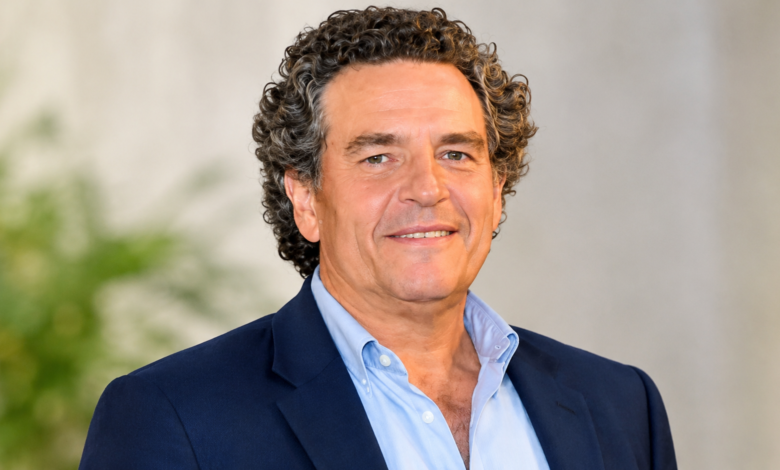
Carlos Scola Pliego is a Spanish filmmaker whose name has attracted public interest because of his marriage to internationally celebrated singer Sade Adu. Although their relationship brought him into the public eye, his professional background began in the film industry, where he worked behind the camera on different productions and developed experience in filmmaking.
For many people searching for Carlos Scola Pliego, the first question is how he became connected to Sade and what happened during their marriage. However, his story also deserves attention from a professional perspective. His film credits, documentary projects, and involvement in Spanish and international productions offer a more complete picture of his background.
Unlike many people connected to celebrities, Carlos has maintained a relatively private public profile. Consequently, information about his childhood, family, education, exact age, and present-day activities is limited. Some websites publish detailed personal claims without reliable supporting evidence, making it important to distinguish established information from speculation.
This article explores Carlos Scola Pliego’s professional background, filmmaking career, relationship with Sade Adu, marriage, separation, and the questions that remain unanswered about his life.
Who Is Carlos Scola Pliego?

Carlos Scola Pliego is a Spanish film professional known for his work as an assistant director and filmmaker. He is also recognized as the former husband of British singer Sade Adu, whose music became internationally popular during the 1980s.
His professional credits are generally listed under the shorter name Carlos Scola, although his full name appears in certain film records. His work includes contributions to film productions, directing, and documentary filmmaking.
One important detail about his career is that he was already involved in the entertainment industry before becoming publicly associated with Sade. He was not simply someone who entered the public conversation because of a celebrity relationship.
The American Film Institute’s film catalogue, for example, identifies Carlos Scola as an assistant director for the Spanish production crew on the 1985 film Eleni. This provides an independently documented example of his professional involvement in filmmaking. AFI Catalog+1
His connection with Sade remains the most recognizable part of his personal biography, but his professional work provides important context for understanding who he is.
Carlos Scola Pliego: Biography at a Glance
The following table summarizes the information that can reasonably be established from available biographical and film records.
| Detail | Information |
|---|---|
| Full name | Carlos Scola Pliego |
| Professional name | Carlos Scola |
| National background | Spanish |
| Profession | Filmmaker and film production professional |
| Known for | Filmmaking career and marriage to Sade Adu |
| Former spouse | Sade Adu |
| Marriage year | 1989 |
| Documented directing projects | Ngira: Gorilas en la montaña and Donde termina el corazón |
| Notable production credit | Eleni (1985) |
| Birth date | Not reliably established |
| Exact age | Not publicly confirmed |
| Education | Not reliably documented |
| Children with Sade | No publicly documented children |
| Verified net worth | Not available |
| Current residence | Not reliably established |
These details should be understood as a summary of the available public record, rather than a complete account of his private life.
Early Life and Background of Carlos Scola Pliego
One of the biggest challenges when researching Carlos Scola Pliego is the lack of reliable information about his early years.
Many celebrity biographies begin with details about a person’s parents, birthplace, childhood, schooling, and family environment. However, comparable information is not readily available in authoritative sources about Carlos.
His Spanish background is established through Sade’s official biography, which describes him as a Spanish film director. A 2024 feature published by the Spanish newspaper EL PAÍS also describes him as a Madrileño, indicating his connection with Madrid. sade.com+1
Nevertheless, this does not provide enough information to reconstruct his childhood or family history.
Where Was Carlos Scola Pliego Born?
Carlos is associated with Spain, and EL PAÍS specifically describes him as being from Madrid.
However, a precise birth date and a fully documented birthplace have not been established through the strongest available sources.
Readers may encounter websites that provide specific birth information, but without dependable documentation, those details should not be treated as confirmed facts.
What Is Known About His Family?
Carlos Scola Pliego has not become widely known for discussing his family background.
There is no sufficiently reliable public record establishing the names of his parents, whether he has siblings, or what his childhood was like.
This lack of information does not mean that his family history is unimportant. It simply means that it has not been documented in a way that allows responsible biographical reporting.
Education and Interest in Filmmaking
His professional history demonstrates that Carlos developed experience in film production, but publicly accessible sources do not establish which schools or institutions he attended.
It would be inaccurate to assign him a particular university degree or filmmaking qualification without supporting evidence.
What can be examined more confidently is his professional development through the film productions associated with his name.
Carlos Scola Pliego’s Career in the Film Industry
Carlos Scola Pliego’s career is an important part of his biography because it shows that his professional interests extended beyond his later association with Sade Adu.
He worked primarily behind the camera, participating in different areas of film production. These responsibilities are often less visible than acting or directing, but they play an essential role in bringing films to completion.
His recorded work includes assistant-directing responsibilities and documentary projects.
Working as an Assistant Director
An assistant director helps coordinate the practical activities involved in making a film. The position can involve production scheduling, communication between departments, coordination of filming activities, and helping the director’s plans become workable on set.
It is different from being the principal director.
Carlos’s documented assistant-directing credit on Eleni demonstrates this distinction. The American Film Institute identifies Peter Yates as the film’s director and Carlos Scola as an assistant director with the Spanish crew. AFI Catalog
This is a meaningful professional credit because Eleni was an international production involving filmmakers and crew members from different countries.
Working on International Productions
Film production frequently brings together professionals with different nationalities, languages, and areas of expertise.
Carlos’s involvement with Spanish production teams placed him within this wider filmmaking environment.
His name is also associated with the 1985 television miniseries Christopher Columbus, where film-credit records list him under his full professional name.
Such projects help explain the type of professional environment in which he worked before his relationship with Sade became a subject of public interest.
Rather than building a career around celebrity attention, his work was connected with the practical and creative processes involved in filmmaking.
His Documentary Filmmaking Projects
Beyond assisting other directors, Carlos Scola Pliego also became involved in directing documentary productions.
Two projects are particularly important when examining his career: Ngira: Gorilas en la montaña and Donde termina el corazón.
These works provide a better understanding of his interests as a filmmaker and demonstrate that his experience was not limited to supporting roles.
1. Ngira: Gorilas en la montaña (1988)
Ngira: Gorilas en la montaña is one of the documentary projects associated with Carlos Scola.
The title refers to mountain gorillas, and the production is identified in film records as a short documentary. Carlos is credited in connection with its direction and writing, with production credits also appearing in film databases.
Documentary filmmaking requires a different approach from conventional fictional storytelling. Instead of building a narrative entirely around scripted characters, documentary filmmakers work with real environments, subjects, and events.
A wildlife-focused project also involves particular production challenges, including filming in natural environments and presenting animals and their surroundings responsibly.
This project is an important part of Carlos’s professional history because it demonstrates his involvement in documentary storytelling during the late 1980s.
2. Donde termina el corazón (1989)
Another significant project associated with Carlos is Donde termina el corazón, released in 1989.
Film records identify him as the director and writer. The documentary explores African environments and human experiences, with descriptions connecting its subject matter to locations ranging from forest regions to urban communities.
The project is particularly relevant because it shows Carlos working in a creative leadership position rather than exclusively in an assistant-directing role.
Directing a documentary involves making decisions about the subject, visual presentation, narrative structure, and the material that eventually reaches viewers.
Although the film is not widely discussed in mainstream entertainment media today, its place in his filmography provides useful insight into his work.
It is important not to exaggerate its commercial success or cultural influence. Available information establishes the project and his involvement, but does not justify unsupported claims about major awards, audience numbers, or international recognition.
Overview of His Film Career
The following table highlights selected productions associated with Carlos Scola.
| Production | Year | Documented involvement |
|---|---|---|
| Eleni | 1985 | Assistant director, Spanish crew |
| Christopher Columbus | 1985 | Assistant-directing credit |
| Ngira: Gorilas en la montaña | 1988 | Documentary filmmaker |
| Donde termina el corazón | 1989 | Director and writer |
| Goal II: Living the Dream | 2007 | Associated additional crew credit |
This is a selection of identifiable projects, not a complete account of every production he may have worked on. Film databases also contain credits under different versions of his name. IMDb+2
How Did Carlos Scola Pliego Meet Sade Adu?
One of the most frequently searched aspects of Carlos Scola Pliego’s biography is his relationship with Sade Adu.
Their connection developed during a period when Sade was becoming one of the most recognizable voices in international music.
Sade, whose full name is Helen Folasade Adu, achieved major success through her distinctive singing style and the music released with her band, Sade.
Her early albums established her reputation, while her relatively private personality made her personal life particularly interesting to fans.
According to a 2024 retrospective published by EL PAÍS, Carlos worked as an assistant director on three music videos associated with Sade’s 1985 album Promise.
The newspaper reports that the two later reconnected when Sade moved to Madrid during a difficult period in her personal and professional life.
Their relationship developed from that renewed connection. EL PAÍS
Their Connection Through Music Videos
The music industry and film industry frequently overlap.
Music videos require directors, camera operators, production assistants, editors, and other professionals to bring an artist’s creative vision to the screen.
Carlos’s work as an assistant director placed him in this environment.
His professional involvement with Sade’s music videos provides a documented connection between their careers before their romantic relationship became widely known.
It is worth remembering that his work behind the camera was separate from Sade’s role as a singer and performer.
Sade’s Move to Madrid
During the 1980s, Sade experienced considerable professional success, but her growing popularity also brought personal pressures.
The EL PAÍS retrospective explains that she eventually spent time in Madrid, where she reconnected with Carlos.
The Spanish capital became an important setting in their relationship.
Madrid offered a different environment from the intense public attention surrounding Sade’s music career in Britain.
Their relationship developed during this period, and Carlos became an important person in her personal life.
Carlos Scola Pliego and Sade Adu’s Marriage
Carlos Scola Pliego and Sade Adu married in 1989.
The marriage is confirmed by Sade’s official biography, which specifically identifies Carlos as the Spanish film director she married that year. sade.com
Their wedding attracted interest because Sade was already an internationally successful recording artist.
Carlos, meanwhile, was working in the film industry rather than pursuing a public celebrity career.
According to EL PAÍS, the wedding took place in October 1989 at a Spanish castle, although the newspaper notes that contemporary reports provided few additional details about the venue. EL PAÍS
Why Their Wedding Attracted Attention
The relationship brought together two people from different professional environments.
Sade was a globally recognized musician, while Carlos was a film professional whose work was largely conducted away from public attention.
Their marriage became an important chapter in Sade’s personal history.
However, neither person’s public profile provides a complete account of their private relationship.
There is also a difference between what is established and what later celebrity websites claim. The year of their marriage is confirmed, but more detailed stories about the ceremony and their private celebrations should be treated cautiously unless supported by reliable reporting.
Their Married Life in Spain
Madrid was an important part of their relationship.
According to the 2024 EL PAÍS feature, Carlos accompanied Sade during recording sessions in France for her third studio album, Stronger Than Pride, which was released in 1988.
This places him within her personal life during the period leading up to their marriage.
The album itself was an important stage in Sade’s musical career, continuing the success of her earlier releases.
However, Carlos’s presence during recording sessions should not be confused with an official songwriting, production, or musical performance credit on the album.
His documented professional background was in filmmaking.
Why Did Carlos Scola Pliego and Sade Adu Separate?
Another common question concerns the end of their marriage.
Carlos Scola Pliego and Sade Adu eventually separated, and their marriage ended in divorce.
Film-biographical records commonly list 1995 as the divorce year. However, detailed and independently verified information about the exact legal proceedings and the private reasons for their separation is limited. IMDb+1
It is therefore important not to present speculation about their relationship as established fact.
Understanding Their Separation
Celebrity relationships often receive considerable attention, especially when one person has an international following.
However, public interest does not mean every private detail becomes public information.
There are various online explanations for why Carlos and Sade’s relationship ended, but not all are supported by direct statements or reliable reporting.
Without a detailed account from the people involved, it would be misleading to identify one specific disagreement, personal issue, or event as the definitive reason for their divorce.
What can be said is that their marriage did not last, and both eventually continued with their lives separately.
Did Carlos and Sade Have Children Together?
There are no publicly documented children from Carlos Scola Pliego’s marriage to Sade Adu.
Sade later became a parent in 1996, after her marriage to Carlos had ended.
Her child is known publicly as Izaak Theo Adu, who was born under the name Mickailia Adu. This later chapter of Sade’s family life should not be confused with her earlier marriage to Carlos.
The distinction is important because some online biographies discuss Sade’s family without clearly separating different periods of her personal life.
What Happened to Carlos Scola Pliego After His Divorce?
After his relationship with Sade ended, Carlos became much less visible in mainstream celebrity coverage.
Unlike some former partners of famous musicians, he did not establish a widely recognized public identity through interviews, entertainment appearances, or regular media activity.
Nevertheless, the available film credits suggest that his professional history did not simply end with the marriage.
One later credit associated with Carlos is Goal II: Living the Dream, the 2007 football film.
Film databases identify him with an additional crew role, including dialogue coaching in the available credit listings. This is different from directing the film or appearing as an actor.
Dialogue coaching can involve helping performers with pronunciation, speech delivery, language, or consistency in spoken dialogue.
The credit provides evidence of a later connection with film production, although it does not establish exactly what he did professionally after that project.
Did He Continue Working in Filmmaking?
The available public record does not provide a complete picture of Carlos’s professional activities after 2007.
His earlier documentary projects and assistant-directing work are identifiable, but there is insufficient reliable information to describe his current career.
It is possible for film professionals to work on projects that receive limited publicity or to move into other areas of production.
However, without supporting records, it would be inappropriate to claim that Carlos is currently directing films, producing documentaries, or working for a particular production company.
His known credits provide a historical picture, not a verified account of his present employment.
Where Is Carlos Scola Pliego Now?
The current whereabouts of Carlos Scola Pliego are not reliably established in publicly available sources.
His connection with Madrid and the Spanish film industry is documented, but there is no dependable recent interview or official biography confirming his current residence.
He appears to have maintained a private lifestyle rather than remaining involved in the public entertainment world.
Does He Have a Public Social Media Presence?
There is no widely verified official social media account that can confidently be attributed to Carlos Scola Pliego.
People searching for his name may encounter profiles or accounts claiming to represent him. However, without reliable confirmation, those accounts should not automatically be considered authentic.
His limited digital presence also explains why relatively little is known about his everyday activities.
Is He Still Involved in the Film Industry?
There is not enough current evidence to confirm whether Carlos remains professionally active in filmmaking.
His documented work includes projects from the 1980s and a later production credit in 2007.
That history establishes his involvement in the industry over an extended period, but it does not tell us whether he retired, changed professions, or continued working privately.
A responsible biography should leave this question open rather than manufacture a current career update.
Carlos Scola Pliego’s Net Worth
Carlos Scola Pliego’s exact net worth is not publicly verified.
Some celebrity biography websites publish estimated financial figures, but these numbers generally lack reliable supporting documentation.
There is no dependable public financial disclosure establishing his personal wealth.
His career included work in different areas of film production, but knowing someone’s professional credits does not provide enough information to calculate their total assets, investments, income, or financial obligations.
It is also important to distinguish Carlos’s finances from Sade Adu’s wealth.
Sade achieved international commercial success through album sales, performances, and her music catalogue. Her financial circumstances cannot be used to estimate the personal wealth of her former husband.
For that reason, any specific net worth figure attributed to Carlos should be treated as unconfirmed.
Why Is Carlos Scola Pliego Still a Popular Search?
Even though Carlos maintains a relatively low public profile, his name continues to attract interest.
There are several reasons behind this.
1. His Marriage to an International Music Star
Sade Adu has maintained a successful musical career for decades.
Her fans remain interested in her biography, relationships, family, and personal experiences.
Because Carlos was her husband, people researching Sade’s life naturally encounter his name.
2. His Connection to the 1980s Music Scene
The 1980s were an important period for Sade’s musical development.
Carlos’s involvement in music video production and his relationship with the singer connect him to that particular period.
This makes his biography relevant to people researching the history of Sade’s early career.
3. His Work Behind the Camera
His filmography provides another reason people may search for him.
Although he was not a mainstream screen personality, his work in assistant directing and documentary filmmaking offers an independent professional story.
4. The Limited Information About His Private Life
People often become more curious when reliable information is difficult to find.
Carlos’s limited public presence has encouraged interest in questions about his age, family, current activities, and personal circumstances.
However, a lack of information should not be treated as an invitation to invent details.
Important Facts and Common Misconceptions About Carlos Scola Pliego
When researching Carlos Scola Pliego, it is useful to separate documented information from claims that have not been adequately established.
| Common question or claim | What the available evidence supports |
|---|---|
| Is Carlos a Spanish filmmaker? | Yes, Sade’s official biography identifies him as a Spanish film director. |
| Was he married to Sade Adu? | Yes, they married in 1989. |
| Did he work in filmmaking before their marriage? | Yes, film records establish earlier production credits. |
| Did he direct documentaries? | Yes, two documented projects are associated with his directing work. |
| Was he involved in Sade’s music videos? | Yes, EL PAÍS reports his assistant-directing work on three videos connected with Promise. |
| Did he and Sade have publicly documented children together? | No publicly documented children from their marriage have been established. |
| Is his exact age known? | Not reliably confirmed. |
| Is his net worth known? | No verified figure is available. |
| Where does he live today? | His current residence is not reliably confirmed. |
| Is he still working in films? | His current professional status is unknown. |
This distinction makes a biography more useful because readers can understand what is established without confusing online estimates with verified information.
The Difference Between Carlos Scola and Carlos Scola Pliego
Another interesting detail is the variation in the way his name appears in film records.
Some productions and professional databases use Carlos Scola, while other records identify him as Carlos Scola Pliego.
These names are associated with the same filmmaker in the available professional records.
For example, the American Film Institute lists him as Carlos Scola in the credits for Eleni, while other film records associate his full name with the 1985 Christopher Columbus miniseries.
This variation is relevant when researching his filmography because searching only one version of his name may overlook certain professional credits.
There is no need to assume that the two names represent different people or that a formal name change occurred.
Carlos Scola Pliego’s Place in Sade Adu’s Biography
To understand why Carlos remains relevant, it helps to consider the larger story of Sade Adu.
Sade became internationally recognized through a combination of smooth vocals, sophisticated arrangements, and a distinctive musical identity.
Her albums, including Diamond Life, Promise, and Stronger Than Pride, helped establish her reputation.
Despite her musical success, Sade has generally preferred to keep her personal life away from excessive public attention.
Her official biography discusses her marriage to Carlos as one of the important personal events during the years when she balanced her career with her private life. sade.com
Carlos therefore occupies a specific place in her biography.
He was not simply a person mentioned in a celebrity relationship story. He was also a professional filmmaker whose career intersected with the music video production environment in which Sade was working.
Their relationship connected two creative industries, but their marriage eventually ended.
For readers interested in music history, this connection offers a glimpse into the personal circumstances surrounding an important period in Sade’s career.
For readers interested in filmmaking, Carlos’s production credits provide another reason to explore his background.
Both perspectives help create a more balanced understanding of his life.
Frequently Asked Questions About Carlos Scola Pliego
1. Who is Carlos Scola Pliego?
Carlos Scola Pliego is a Spanish filmmaker and film production professional. He is best known publicly as the former husband of singer Sade Adu. His professional credits include assistant directing and documentary filmmaking.
2. Was Carlos Scola Pliego married to Sade Adu?
Yes. Carlos Scola Pliego married Sade Adu in 1989. Their marriage later ended in divorce, commonly recorded as taking place in 1995.
3. What does Carlos Scola Pliego do for a living?
Carlos has worked in the film industry, including assistant directing, documentary filmmaking, and other production-related responsibilities. His current occupation has not been reliably established.
4. How did Carlos Scola Pliego meet Sade?
According to EL PAÍS, Carlos worked as an assistant director on three music videos associated with Sade’s 1985 album Promise. They later reconnected in Madrid, where their romantic relationship developed.
5. Did Carlos Scola Pliego and Sade have children?
There are no publicly documented children from their marriage. Sade became a parent in 1996, after her relationship with Carlos had ended.
6. What movies did Carlos Scola Pliego work on?
His documented film-related projects include Eleni (1985), Christopher Columbus (1985), Ngira: Gorilas en la montaña (1988), and Donde termina el corazón (1989). He is also associated with Goal II: Living the Dream (2007).
7. How old is Carlos Scola Pliego?
His exact date of birth has not been reliably established. Consequently, there is no dependable way to calculate his current age.
8. What is Carlos Scola Pliego’s net worth?
His net worth is not publicly verified. Online estimates should not be treated as confirmed financial information because reliable documentation supporting a specific amount is unavailable.
9. Where is Carlos Scola Pliego today?
His current location and everyday activities are not reliably documented. He has maintained a relatively private public profile since his relationship with Sade ended.
10. Is Carlos Scola Pliego still a filmmaker?
His historical film credits are documented, including work from 2007. However, there is insufficient recent information to confirm whether he continues working in the film industry.
Conclusion
Carlos Scola Pliego is an interesting figure whose biography connects the worlds of filmmaking and international music. Although many people recognize his name because of his former marriage to Sade Adu, his professional background deserves attention in its own right.
His work as an assistant director, involvement in documentary projects, and contributions to film productions demonstrate that he had an established professional identity before becoming associated with the famous singer.
His relationship with Sade began during an important period in her musical career. The couple married in 1989, shared part of their lives in Spain, and eventually separated.
Despite the continuing curiosity surrounding his personal life, many details remain private. His exact age, family background, financial circumstances, and current whereabouts have not been reliably established.
Ultimately, understanding Carlos Scola Pliego requires looking beyond his connection to a famous musician. His documented filmmaking experience and relatively private personal history make him a subject worth exploring, while the gaps in his biography remind us why accuracy matters when writing about real people.
YOU MAY ALSO READ





One Comment